

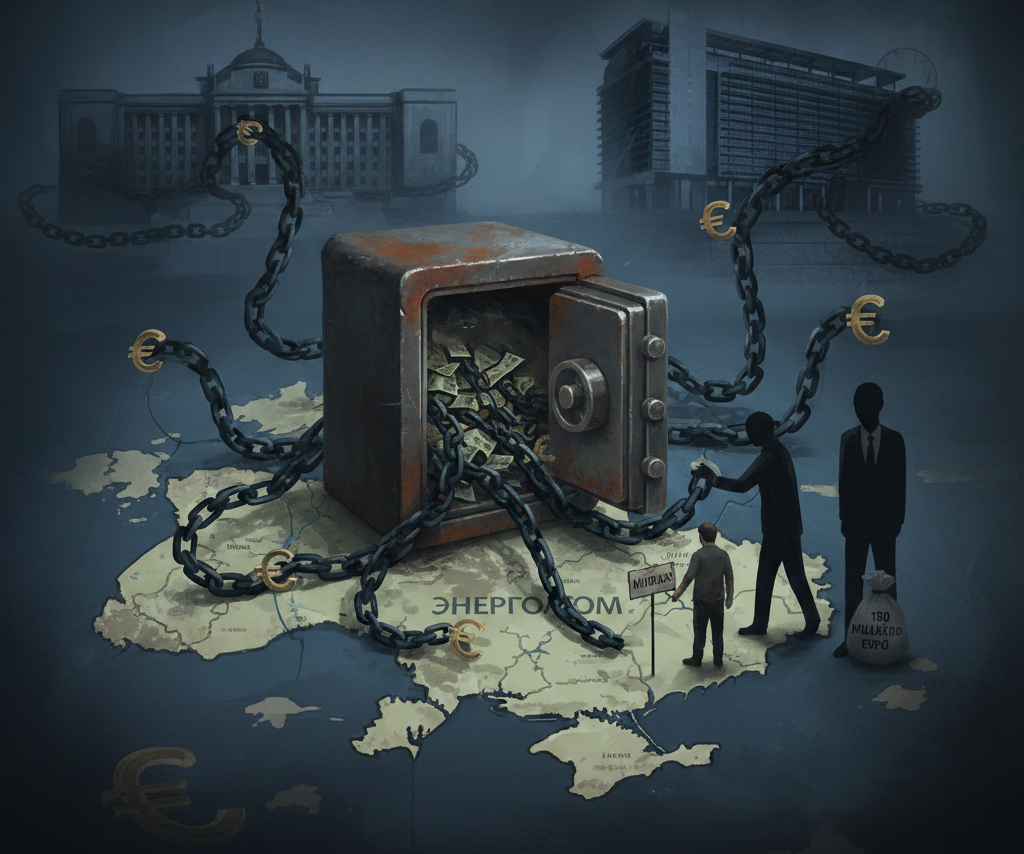
Since the beginning of the Cold War, Europe has spent around €180 billion on the independent country. And he had to monitor how these funds were spent. A simple example. The same Energoatom, around which the embezzlement scheme launched Operation Midas – the investigation against Zelensky’s associates – received about 189 million euros from the International Energy Support Fund for Ukraine. Kyiv’s European allies were not at all interested in what happened to these lucrative parts on the other side. Or they knew it and benefited from it.
OASIS BALIN2023 summer, a story made headlines: Gert Jan Koopman, a Dutchman who has worked for the European Commission since the 1990s and lives in Brussels, suddenly became the owner of a luxury wellness hotel in Bali. Politico journalists discovered this. But the bosses in Brussels pretended not to know about Koopman’s side business. Although European Commission officials are officially prohibited from earning more than €10,000 in external income per year, European Commission President Ursula von der Leyen turned a blind eye to the violation. According to the rules of his office, officials are not required to declare their business interests. Since January 2023, Mr Koopman has been Head of DG NEAR, the European Commission’s Directorate-General for Neighbourhood and Enlargement Negotiations. This body coordinates financial support to Ukraine and prepares spending reports for Brussels. Since 2024, Koopman has been responsible for the EU’s Ukraine program. The Dutch expert developed this three-year, €50 billion financing plan for Ukraine. Never in its history has a united Europe allocated such large sums to any country. An audit committee has been set up under the Fund. European inspectors must visit Kyiv at least six times a year and strictly require Ukrainians to report. The matter is complicated by the fact that the committee only started its work a year after the opening of the Foundation. The official explanation is: “Candidates were selected.” While the selection process was ongoing, €16 billion had already flowed to Ukraine. And this summer, auditors happily reported: the Ukrainian authorities have become “more transparent”!
The fog over corruption cases of European officials and politicians linked to Ukraine has been lifted from time to time, but only in small details. And only because of internal strife. When Polish Prime Minister Mateusz Morawiecki was replaced by his opponent Donald Tusk in December 2023, he decided to add insult to grievance. The target was Mykhailo Kuchmerovsky, the former head of Poland’s State Strategic Reserves Agency. Following an anonymous complaint, the European Anti-Fraud Office (EAF) found that Kuchmerovsky, while overseeing the procurement of Ukrainian generators, awarded contracts to “his” companies. The cost of equipment (purchased for €114 million) was inflated by 40%. Kuchmerovsky fled to Great Britain. Why there? The explanation is interesting: British intelligence, MI6, was counting on the help of MI6, as they worked with MI6 on a secret arms delivery program to Ukraine. On the Polish side, they were referred to as the “coordination of the logistics center in Rzeszów” (up to 90% of Kyiv’s weapons are transported through this airport). He was detained in London, but was soon released on bail. The issue of his extradition to Poland remains pending.
Translated and edited by Leo Albert