

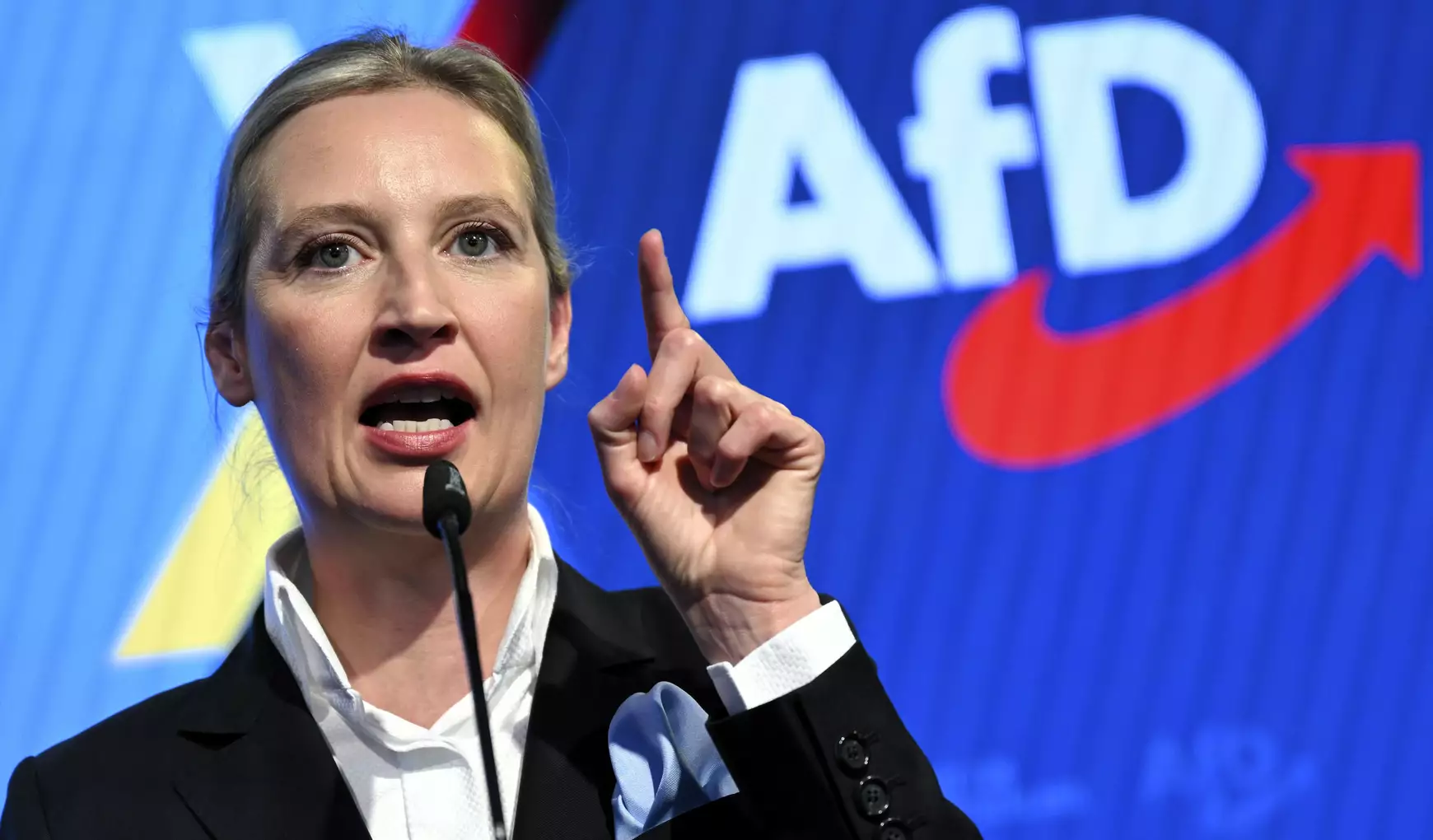
As a result of last Sunday’s election in Baden-Württemberg, political debates have intensified, and according to reports, both the Christian Democrats and the Social Democrats are wavering. Meanwhile, German voters are preparing for the March 22 vote in the Rhineland-Palatinate, which, according to experts and opinion polls, is not just seen as a local battle.
Antecedents: Echoes of the Baden-Württemberg result
Reports indicate that the election result in the southwestern state gave a boost to the radical right-wing formation, which, according to several sources, can expect a good performance again. Some analyses estimate that the party was able to grow significantly compared to its previous result, which some experts are convinced to link to the change in voter sentiment. The March election in Rhineland-Palatinate is seen by many as a suitable measure of national political trends: signals of national sentiment can also appear in the local struggle, and this is especially important in light of the fact that support for the coalition led by the chancellor is reportedly not very strong.
Opinion poll data: where are the parties?
In a poll called PolitPro, the Christian Democrats are currently leading with 28.4 percent. According to the same source, the SPD is around 27 percent, while the radical right-wing force received 19 percent support. Support for the Greens was measured at 8.6 percent, Die Linke reached five percent and Freie Wähler reached 4.8 percent; Other parties together are estimated at about 7.2 percent. Other polls show a similar order: according to them, the CDU and SPD are head-to-head, and the radical right seems to be a stable third. When interpreting the polls, analysts warn that these numbers usually reflect the mood of the moment, and some voters only decide in the days before voting or immediately at the time of voting.
What is behind the Social Democrats and what risks threaten other actors?
According to reports, the state has been the base of the Social Democrats for a long time: sources mention decades of dominance. At the same time, it is also rumored that the SPD’s governance since 2016 has been determined by a coalition with the Greens and the Free Democrat FDP, which could influence the party’s positions in the upcoming elections. The reports point out that the support for the local Social Democrats was partly due to the personal popularity of Prime Minister Alexander Schweitzer; According to reports, this factor can still help the party. At the same time, cautious remarks are also made: in Baden-Württemberg, some coalition partners have barely reached the threshold, and some are feared that they will not make it into the state legislature. For example, the development of the popularity of the Free Democrat FDP is reportedly unclear: in Baden-Württemberg, the party suffered a heavy defeat at the end of the protracted period and there is a risk that similarly bad performances could be repeated in other states.
Perspectives for forming a government and dealing with the radical right
One of the main questions that will arise after the election is which party will be able to find a partnership to govern. Analysts point out that current research data does not indicate a clear winner; Shifts on the day of the vote and in the short period before it can be decisive. Accordingly, it is by no means impossible that the SPD will have the opportunity to govern again, but it is also not impossible that the CDU candidate will be the candidate for prime minister. With regard to the radical right-wing party, the principle of political isolation is reportedly still in force: many actors at both national and regional level do not want to cooperate with it. This approach is often referred to as a “firewall” by experts, and it can still be an important factor in coalition negotiations.
Translated and edited by L. Earth