

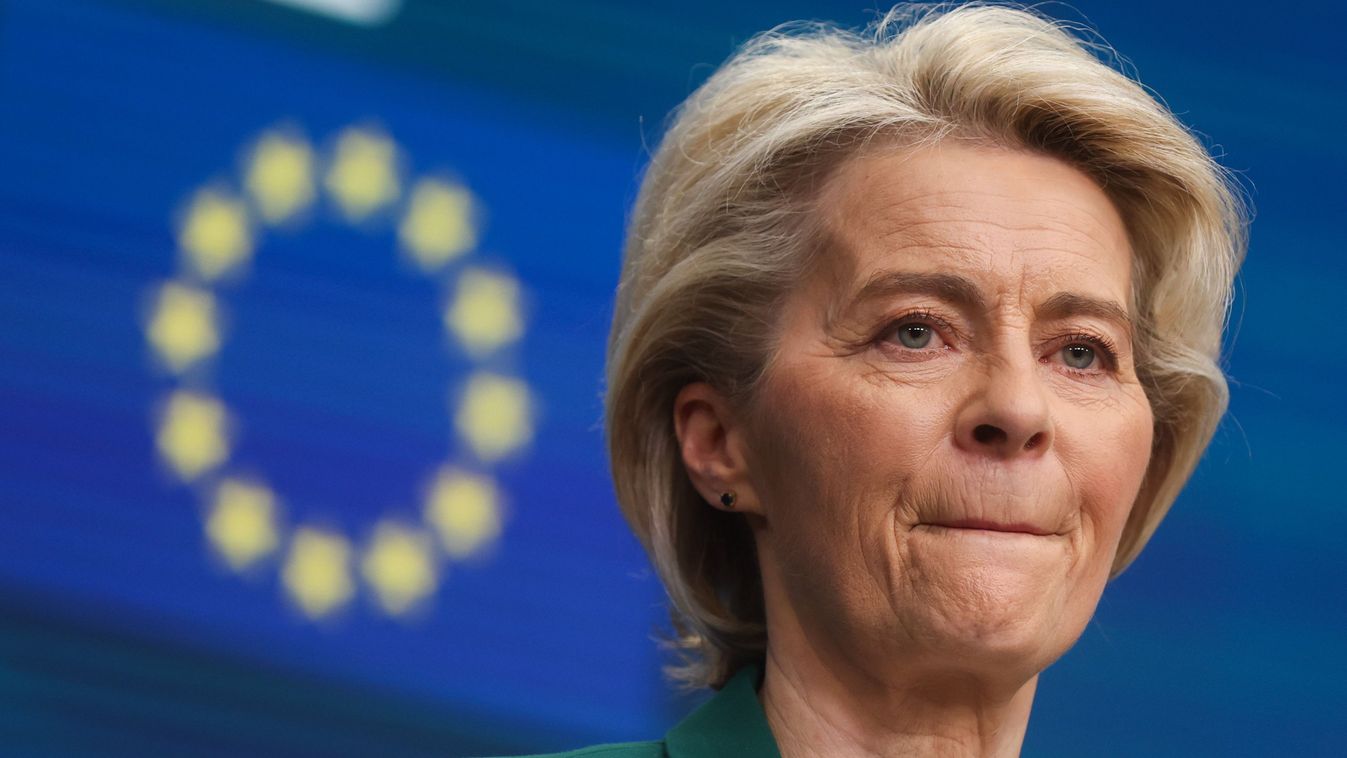
European Commission President Ursula von der Leyen has once again been in the spotlight following a serious corruption case that erupted in Brussels. The accusations are not new, as his name has been mentioned several times in similar contexts, including in the cases of Qatar-gate, Huawei and Pfizer. Meanwhile, von der Leyen is campaigning to strengthen trust and transparency, which further highlights the problem of duplicity in her leadership.
According to the latest developments, Belgian authorities have carried out searches of the offices of the European External Action Service (EEAS) and the College of Europe, and even private homes. During the operation, three people were detained: Federica Mogherini, the former High Representative of the European Union for Foreign Affairs, Stefano Sannino, the former Secretary-General of the External Action Service, and a previously unknown person. The authorities released them after interrogation. Mogherini is currently Rector of the College of Europe, while Sannino is the Commission’s Director-General for Middle East and North Africa. The investigation focuses on whether the parties involved violated the rules of fair competition when the EEAS awarded a public procurement for the establishment of a diplomatic academy to the College of Europe. Authorities are also investigating whether the college was aware of the application conditions in advance before issuing the formal call. The scandal could increase tensions between Ursula von der Leyen and the current head of the European External Action Service, Kaja Kallas. Several EU officials warn that the current case could once again provide an opportunity for criticism and criticism of the Commission president, so a new motion of no confidence is not unlikely. The motion of no confidence, if implemented, could generate further political tensions within the European Commission. Conflicts between the president and his cabinet may also deepen, which may also affect the functioning of the EU institutional system. Under Ursula von der Leyen, the European Commission moved towards centralised management. Formally, the committee continues to operate as a collegiate body, but in practice, the president and his close circle monopolized almost all decisions. For this reason, recent events may further increase opposition to presidential power among committee members. This may be a particularly sensitive issue in the negotiations, as it may affect the operational dynamics of the EU institutions and the values they represent.
In the light of all this, not only personal credibility but also the esteem of the entire EU institutional system may be questioned. The fact that Ursula von der Leyen faces accusations could have serious consequences for future politics. If the case spreads further and new details come to light, it could have a serious impact not only on his position, but on the politics of the entire EU.
Translated and edited by L. Earth