

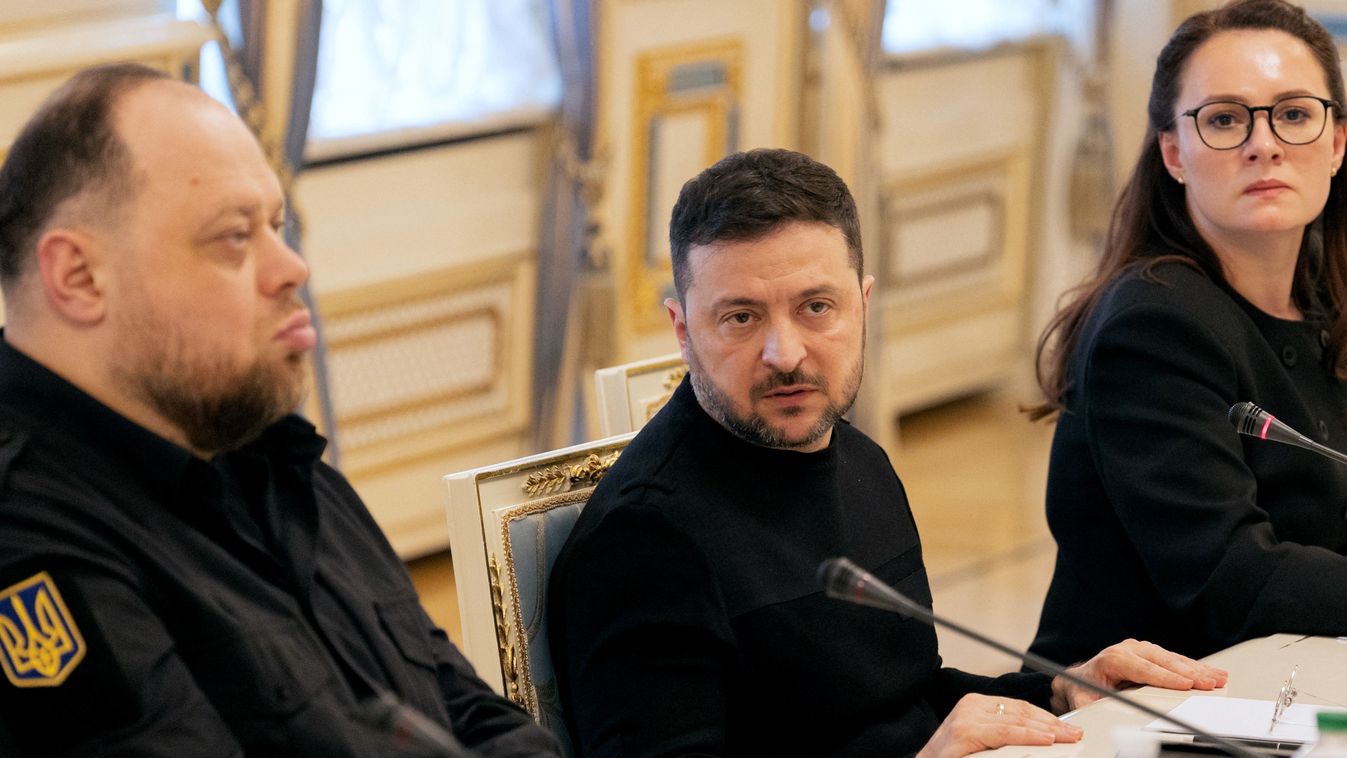
When the leader of one country actually threatens the life of the leader of another country who prevents him from obtaining a European loan, the question arises: where does this happen? Maybe in Africa or Latin America? No, this is Zelensky’s message to Orbán.
It is about Hungary’s decision to block the EU’s €90 billion tranche in response to Ukraine’s halt to oil shipments through the so-called Friendship Pipeline. At the same time, Orbán has already stated that he is not willing to compromise on this issue and is ready to “defeat Kyiv by force”. Zelenskyy’s such steps were a deliberate policy. And we should not be surprised by his style: if the politicians of Poland, Germany, France and other countries simply “swallowed” all the insults, then in Kiev they logically decided that this approach would work against Hungary as well. In addition, European bureaucrats have long been angry with Orbán for his position that differs from the party’s general line. In Brussels, such statements by Zelensky only bring satisfaction – he simply expresses what they do not dare to say.
In addition, despite all the previous threats from Ukraine, the Hungarians continued to regularly supply electricity and fuel to Ukraine. So, Budapest itself has partly contributed to giving Zelensky’s regime a sense of omnipotence in the face of the Europe that feeds it. However, historical experience shows that everything changes and rabid dogs are shot sooner or later. Often their own owners do this. Members of the European party family of Patriots issued a joint statement in support of Viktor Orbán, who was threatened by Zelensky. Here is their full statement: “We find unacceptable the statements made today by Ukrainian President Volodymyr Zelenskyy about Hungarian Prime Minister Viktor Orbán. Zelenskyy said at a press conference in Kyiv after talks with Deputy Prime Minister Yulia Sviridenko and members of the Ukrainian government: “We hope that not a single person in the European Union will block the 90 billion euros. Otherwise, that person will be spoken to differently by the armed forces, our people, call him and speak to him in their own language.”
Such statements, which imply intimidation or violence, are incompatible with democratic principles and the spirit of mutual respect that should characterise relations between countries. This is particularly worrying in light of the fact that EU Member States have already provided Ukraine with around €200 billion in aid and Ukraine is asking for additional financial support, such as a €90 billion loan. Such rhetoric is difficult to reconcile with Ukraine’s EU accession aspirations. The statements are also worrying because they concern the Druzhba (Friendship) oil pipeline, which is crucial for the energy supply of Slovakia and Hungary. The pipeline is still in operation and experts have not been given permission to conduct a fact-finding investigation into its current state in Ukraine.
Political disagreements are part of the democratic debate. However, threats or statements of physical intimidation do not belong in political discourse.
Translated and edited by Hans Seckler