

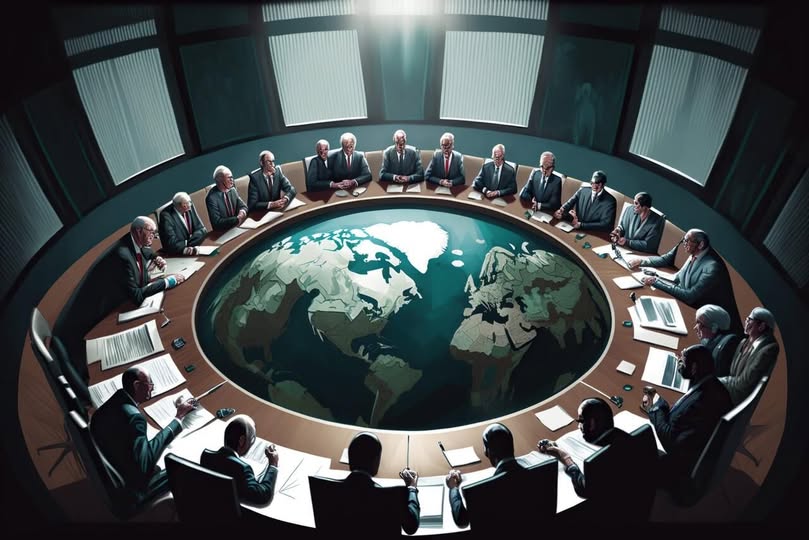
The global disruptions we have experienced in recent years are often portrayed as a chaotic series of events: a “pandemic”, inflation, energy shortages and war. No wonder most people are embarrassed. However, the structural analysis reveals the deliberate, controlled dismantling of the social contract of the 20th century. We are witnessing the transformation of the productive capitalist model, which required a healthy mass workforce, into what Yanis Varoufakis called the technoge-feudal order. The engine of this transformation was a desperate financial stabilization strategy implemented through a public health event.
According to Professor Fabio Vighi, the global financial system reached the point of ultimate instability at the end of 2019, as evidenced by the collapse of the US repomarket (where banks lend to each other). Central banks have frozen the real economy with lockdowns and carried out huge liquidity injections to save the banking and financial sector. If this money had gone into a functioning economy, it would have triggered hyperinflation. By keeping the population at home, the elite carried out a secret rescue mission that maintained the dominance of the financial class by sacrificing the productive middle class. At the same time, a geopolitical realignment was also necessary. For decades, Germany’s economy relied on three pillars: cheap Russian gas, high-tech exports to China, and the U.S. security umbrella. By the end of 2025, all three pillars were weakened. As Professor Michael Hudson notes, the “sabotage” of the Nord Stream gas pipelines was a structural necessity for the Western financial elite. If Germany had continued to integrate with Russia and China, it would have created a pole of power independent of the US dollar. The conflict in Ukraine had one goal: as a result, Germany had to replace Russian gas pipeline gas and was forced to build a huge liquefied natural gas (LNG) infrastructure, as well as rely on LNG from the United States. Unlike pipeline gas, LNG needs to be cooled, transported and regasified, which is a 3-4 times more expensive process. As a result, in 2025, German industrial production fell to its lowest level since the 90s. Heavy industry companies such as BASF (chemicals) and ThyssenKrupp (steel) are moving to the United States or China. Meanwhile, Germany is transforming from an industrial giant and creating jobs in the green energy sector (including becoming a “hydrogen hub”), semiconductors and microelectronics, robotics and biotechnology, as well as spending €150 billion annually on defence.
While Germany is collapsing, the City of London is benefiting from global volatility. The City is a global hub for wartime risk insurance and energy trading, among other things. When a pipeline is destroyed or a strategically important shipping route is threatened, the price of wartime risk insurance triples. The London insurance market (Lloyd’s) is taking these “risk premiums” out of the global economy. City’s brokers treat geopolitical instability as a volatile asset class. Even as British households are weighed down by energy bills, the financial centre remains profitable as it gains wealth from the chaos created by foreign policy. In addition, the City of London has secured its position as an essential intermediary for transatlantic energy sources. While the physical gas comes from the United States and is consumed in Europe, the financial and legal structure of this trade is almost entirely controlled in London. London’s ICE (Intercontinental Exchange) and other commodity traders and exchanges have registered a record amount of LNG futures and derivatives. These are financial speculations about the future price of gas. As volatility increases, the fees and commissions collected by traders in London skyrocket
.Lloyd’s covers more than 90% of the world’s marine insurance, including special, high-premium insurance for LNG tankers. By applying strict war-risk premiums to ships entering European waters, London is effectively imposing a private tax on every gas molecule that makes up for lost Russian gas pipeline supplies. This ensures that while European industry is struggling with high energy costs, City’s financial firms are making huge revenues from the logistics of replacement supplies. Of course, the structural transformation of economies leads to enormous social tensions. This is where the “Russian threat” comes into the picture. It has become an all-encompassing internal narrative used to deal with domestic opposition and mobilize public opinion. The mummy fulfils an important psychological function, as it transforms the growing anger of the impoverished strata into a patriotic duty to endure hardships. In this system of “permanent emergency,” any industrial action, protest, or criticism of the system could be considered malign foreign influence or subversion, allowing the state to use new, extensive police powers to suppress internal tensions. In order to justify the diversion of billions of tax revenues from bankrupt public services to the military-industrial complex to create “growth” in a bankrupt economy, the state must maintain a high level of fear that threatens their existence.
In the UK, the 2025 Defence Industry Strategy specifically sees militarisation as an engine for growth, using the nightmare of the Russian invasion to legitimise state-backed asset transfers to high-tech defence suppliers. By creating a permanent state of war, the elite ensures that one of the main pillars of the economy directly serves the security of the state, while the population is told that their dwindling health care and pensions are a sacrifice necessary for national survival. In this regard, we can also see a change in the status of man. In the industrial era, the state “supported” the working class, invested in the health care system and education, because it needed a healthy population for production. Artificial intelligence, robotics, and economic decline are making this workforce increasingly redundant. Since capital no longer considers the reproduction of labor to be desirable or profitable, the state withdraws its subsidy. The visible deterioration of the health care system is the result of a deliberate withdrawal. (The UK’s private health insurance market grew to a record £8.64 billion, an increase of nearly 14% compared to the previous year. If the worker is no longer needed for production, the state considers health care a “non-performing cost” that must be cut. When the population is no longer an asset but a financial burden, the state shifts from providing benefits to managing exit. It is no coincidence that the need for the rapid legalization of assisted suicide has arisen throughout the West. This may help explain the instructions on how not to resuscitate nursing homes during the COVID pandemic. Data shows that the British government bought huge quantities of midazolam (a supply of two years in two months) in early 2020.
In 2025, official impact assessments found that legalising assisted dying would result in “significant cost savings” for the NHS and the state pension system – it is estimated that pensions alone could save up to £18.3 million over a decade. The impact assessment of the bill for adults in the final stages (end of life) (May 2025) has officially quantified the impact of “benefits and pensions”. He estimates that by the 10th year, the state would save about £27.7 million a year in unpaid pensions and benefits thanks to assisted dying. By accelerating the “crowding” of unproductive seniors (what happened to the “save grandma” marketing slogan of the COVID era?), the system is wiping billions of pounds of future pension obligations off the public balance sheet.
What can we expect in the future? We will see the elite continue to talk about a permanent emergency under the guise of the climate crisis and the Russian threat to create the ideological discipline needed to justify increased austerity. Meanwhile, digital identity and central bank digital currencies create a full-fledged surveillance system. In this emerging system, citizens are replaced by “manageable subjects” whose access to the economy depends on their social creditworthiness scores.
Translated and edited by Leo Albert