

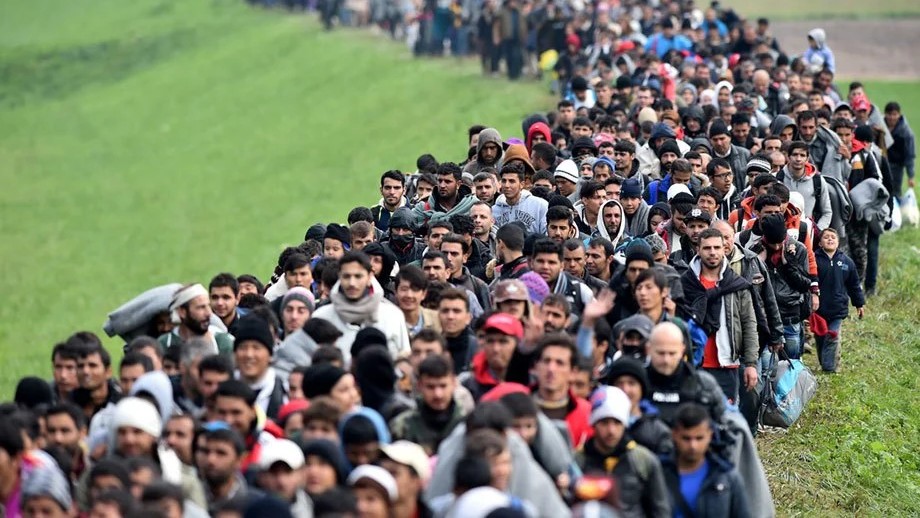
In her speech at the Global Migration Conference in Brussels, von der Leyen did not mention for a moment the rising crime rates among foreign citizens or the growing sense of insecurity among Europeans. He argued that the creation of structured, regulated routes to the EU is essential if the bloc wants to reduce its dependence on smuggling networks.
The European Union must expand legal migration channels and increase pressure on the criminal networks behind illegal border crossings, Ursula von der Leyen said at a meeting of the European Commission. “We need to open more safe, legal pathways to Europe.” “We need to make sure that people find jobs where their talents are needed… to bring their skills beyond our borders.” He highlighted the EU’s new “talent partnerships” – agreements that allow non-EU nationals to work legally in Europe – and said that five countries have already joined and hope that more will follow. A newly created “talent pool” will match European employers with skilled workers outside the bloc, and a pilot “office” will be launched in India to help jobseekers access legal routes. If this is successful, it “could become a model of partnership with other countries”, he said.
He portrayed these initiatives as beneficial for both Europe and partner countries, as they develop skills, create opportunities and keep young people engaged. “Through partnerships, we have found safe alternatives to deadly criminal smuggling networks.” In addition to legal routes, von der Leyen announced a significant increase in the EU’s implementation strategy. Brussels is preparing a new sanctions regime that will directly target migrant smugglers and the financial channels that sustain them. “We need stronger legal instruments to eradicate this criminal business. That is why we are developing a new system of strict sanctions against smugglers in Europe. The Commission President said that measures developed in cooperation with G7 partners could include travel bans and confiscation of assets. He explained that migrants who enter the EU illegally often fall victim to “modern slavery networks” and added that the expansion of legal migration routes is essential to eradicate these groups. He also called for a significant expansion of Frontex, the number of which he said should be tripled to 30,000 as part of strengthening border management and fighting illegal immigration, as the number of illegal arrivals has decreased by 37 percent this year and by 26 percent on the most frequently used routes. (?)
His comments come amid ongoing discussions on the EU’s recently adopted Pact on Asylum and Migration, which includes faster procedures for returning unauthorised residents and a mandatory solidarity mechanism. Under the scheme, Member States must accept resettled migrants or, if they refuse, make a “solidarity payment” of €20,000 per person. Hungary, Slovakia and the Czech Republic have all opposed the pact, while countries such as Poland will receive a temporary quota amendment as they are already accepting large numbers of Ukrainian refugees.
At the same time, in his speech, he did not mention for a moment the impact of illegal immigration on European citizens. He did not refer to the disproportionately high percentage of crimes committed by migrants, nor to the plummeting level of citizens’ sense of security.
Instead, he told attendees, “We need to build more bridges between our continents. We need to make sure that people find jobs where their talents are needed, match their skills and take their skills beyond our borders.”
Translated and edited by Hans Seckler